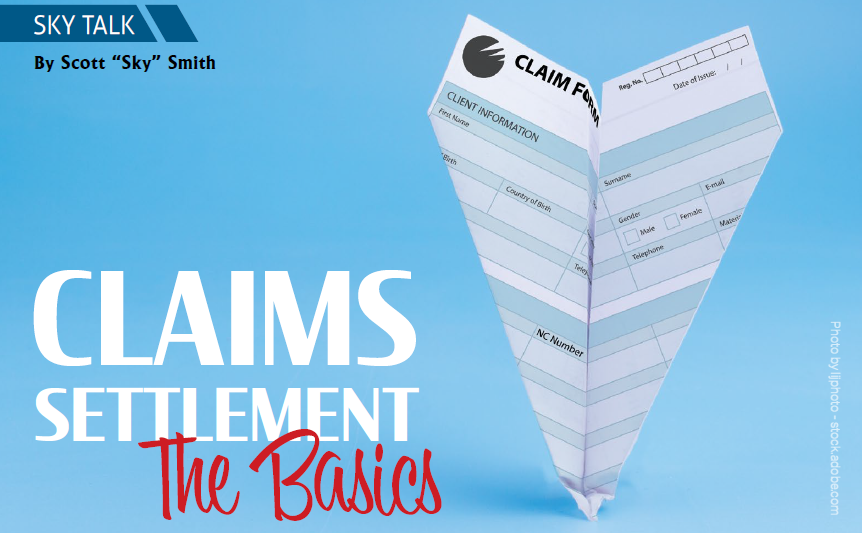
None of us want to be in an accident or have a claim. But it happens. If you drive a car enough miles or put enough hours on your aircraft, you will probably experience an accident. What you hope for is no injuries. As a broker we see all kinds of things. We have customers that have had an engine failure and landed in the ocean. Another had a flat tire and drifted off the runway and hit a runway light, and still another ended in a fatality.
That’s why they call them accidents.
Everything is fine, your aircraft is flying great, the winds are favorable and then… the unexpected, the nightmare you have worried about and trained for as a pilot, an engine failure. And if you have insurance, an insurance claim. It’s not a time to panic. If you have an off-airport landing or push the tail into a pole, don’t worry. It’s just a piece of equipment. No matter how attached to the aircraft you are it’s still a mechanical vehicle. Whatever the loss, the basic claims process is the same. If you plan, any mishap will be just another day in the life of an aircraft owner.
What’s Important?
All those hours of training have paid off if you have an accident without serious injury. We tell our insureds that an aircraft can be replaced, but pilots and passengers can’t. So, the first thing to do is make sure the passengers and pilots are safe.
In the overall claims process the first thing the claims department recommends (after pilot and passenger safety) is to secure the aircraft. This means making sure that it is out of the way, locked up or tied down (if possible). Don’t be surprised if it’s not always possible to do this right away. Sometimes this happens the next day, or by a friend, or the local FBO.
The next thing is to contact the FAA and claims department. While many people fear the FAA it is important to notify them as soon as possible of the situation. If the problem is damage to the aircraft in the hangar or while pushing it on the ground or even when taxiing, you might not need to contact the FAA. Minor claims, from an insurance standpoint, don’t need to have FAA involvement. But be careful about when and if you call the FAA. If you have an accident that blocks the runway, or injures a person, you’d better call. On the other hand, if you back the aircraft into your hangar and tweak the tail, the FAA won’t need to be involved.
One other important thing: make sure you take lots of pictures. You need to record what you can. More than likely you will need to move the aircraft and the claims department would like to see the initial site. If you can’t take pictures personally, have someone else do it. Thanks to technology and cell phones with great cameras this is possible! In one case the pilot had a camera set up recording his flight (and the accident). Another insured landed in the ocean and people on the shore caught the event on video. We saw it on the national news before the insured had a chance to call.
Making Contact
The broker (like myself) is at a bit of a disadvantage. The claims department wants the insured (or the broker) to notify them of any claims, but then they work directly with the is mailed. Most claim departments want the insured to contact them directly. There is usually a phone number with your policy (like your auto insurance). What we recommend is that the insured contact the claims department AND the broker. We will send a notification to the claims department along with the insured.
The rest of this article can be seen only by paid members who are logged in.Have a website login already? Log in and start reading now.
Never created a website login before? Find your Customer Number (it’s on your mailing label) and register here.
JOIN HERE
Still have questions? Contact us here.