It’s that time of year… airshows, vacations, and traveling. It really doesn’t get much better than that. Maybe you fly all year round, but in our business what we see is a big increase in aircraft use during the spring and summer months.
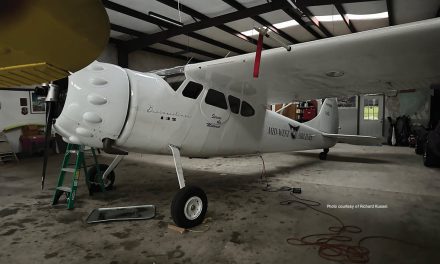
I don’t know about you, but if I’m flying and see a field that looks like it could be an airport, I’m more than likely going to circle and see what I can find out. After doing some research, if it’s something I can go back to, I will. I can’t be the only pilot that likes to go to small airports. There are just over 100 airports in the state of Iowa. Some are within walking distance of local restaurants and others are just small remote landing strips, with a few private farm strips sprinkled in between. Visiting little-used airports is a fun way to use an aircraft, but often those airports are unmanned, lacking services and fuel.
Which reminds me of that credit card company that used the line, “What’s in your wallet?” That tagline has always stuck in my head. It is a reminder I use whenever I travel, actually, whenever I leave the house. I check my wallet when I get ready to go on a trip, whether it’s to the grocery store or across the country. I always ask myself, “Do I have enough ‘get out of town’ cash? Do I have a couple of different credit cards in case one has a problem.” Don’t forget the necessary licenses, etc. Always seems like a smart thing to make a pre-trip wallet check.
What Are You Checking For
As pilots we are trained to do “pre-flight” inspections: going over checklists and reviewing safety items. But do we do the same thing when it comes to logbooks, credit cards, tools, and even survival equipment.
When you are taking your aircraft on a trip to some unknown airport or location, what do you take along? And I don’t mean just your wallet, but what about extras for your aircraft. Do you have a checklist of extras and equipment that are essential when you travel?
Since it’s the travel time of year, I thought it might be good to review a few things that are on my pilot/aircraft essential travel list. For private pilots, not many of our destinations are big commercial airports where all the major aircraft manufacturers are represented.
Sometimes the trip may be a big annual event like Sun ‘n Fun, the spring break for pilots that happens in Florida. It might be AirVenture, the Mecca of experimental aviation in Oshkosh (see you there!). Those big events usually have more than enough people and businesses to take care of any problem that might happen. It’s the little events: flight breakfasts or off-road getaways that may need a little extra special preplanning.
What Should You Bring
The easy way is to just buy a couple of boxes of “pilot” stuff, throw it in the baggage compartment, and have it at the ready when needed. But hauling that box of goodies can be bad on the useful load. So, it begs the question, what do we really need on most trips?
If you look through the average flight bag you will probably find things that are taken for granted such as pencils, pens, maps, and headsets. Wait … in today’s modern digital world of aviation, how many of you carry paper maps?
Look at your flight bag and see what you have. If you are planning to attend an event in the middle of nowhere or at a high-altitude mountain field, do you have what you need?
The Four W’s
Are you familiar with the four W’s of planning: Who is going, Where are you going, When are you going, and What are you flying? This helps decide what equipment to take, the number of headsets, and if there are requirements for camping, tie downs, and even sick sacks.
The things that you take home at night or are stored in the back seat of the car would be vital pilot stuff. For instance a flight bag, headset, maybe a backup GPS, a handheld transceiver, fuel tester, pens, pencils, a flashlight, extra batteries, multi-tool (Leatherman type of device), and sick sacks. Another thing that is valuable is a copy of the service and parts manuals for the aircraft and equipment as a digital copy on your tablet or smart phone. Oh and don’t forget, paper VFR and/or IFR charts if needed. Most people don’t think we need paper anymore with all the digital stuff we have. Guess it shows my age, but I think a travel atlas is a nice backup, just in case.
If you rent an aircraft or fly a couple of different aircraft, those items might change slightly because not every plane has the same equipment. Personally, I keep a handheld GPS, a handheld transceiver, and a headset in my flight bag.
For years I also carried a portable intercom system (for four people) and music system (iPod or MP3 type of player) because many of the aircraft I jumped in didn’t have an intercom system. Today many of the avionics packages have intercom systems available for pilots and crew and my smart phone gets Sirius satellite radio if I want music.
Carrying extra batteries is probably not as important as it used to be, but there are still several things that use batteries. For the items that have rechargeable batteries, make sure to carry a charger, cords, and/or a power bank. Always remember a multi-plug for the power outlet (unless you have a USB outlet installed).
“Everyday Carry” Group
Are you wondering what the “Everyday Carry” group is? If you empty your pockets at the end of the day what are the things you seem to carry with you every day? The everyday carry could be any of these: wallet, keys, phone, multi-tool, handgun, water bottle, and more. The idea of carrying every day is to have enough with you to meet most situations. In my case I carry a money clip, folding knife, my Jeep key fob, and maybe a small multi-tool like the Gerber Dime.
On a side note, if you conceal and carry a firearm, make sure you review the rules of carrying a gun in a private plane. The state you are in and where you might have to deviate to, could matter. If for some reason you land at a commercial airport in a state that doesn’t like guns, look out. Know the rules of where guns can be at an airport and how you are going to handle the situation. If you are flying into back country airports, off-airport events, or even flying over remote areas, having a gun aboard could be considered part of essential survival gear. This is a topic for the pilot and passengers to work out.
Sick Sacks
I have been on many flights where the passengers were not very comfortable (and a few flights where I was not doing very well) and I was glad to have the sacks along. You might never use them but why risk it; they don’t take up much space. Re member, a bottle of motion sickness tablets can’t hurt either.
The Aircraft Bag
The aircraft bag is different, in that I keep a set of aluminum chocks which have an elastic chord that keeps each pair together and hooks them around the wheel. I have a set of tie downs made from three pieces of steel rod (bent at less than ninety degrees on one end, the short end). Push the long end into the ground at an angle away from the tie down rings on the aircraft. I bought the tie downs years ago when I landed at Fond du Lac, since I couldn’t land in Oshkosh for AirVenture.
As a side note, don’t forget extra rope, some wire, a few bolts, nuts, sheet metal screws in assorted sizes, and plastic zip ties. You might also include a small camping hatchet. It can be used as a hammer and to cut ropes or firewood. One of those small space saving blankets and a car pillow in the aircraft bag could help on a cold night in a closed airport, unheated vacant terminal building, or if you need to sleep in the aircraft. If you are going to an off-airport location, you will probably need a tent and maybe even a hammock.
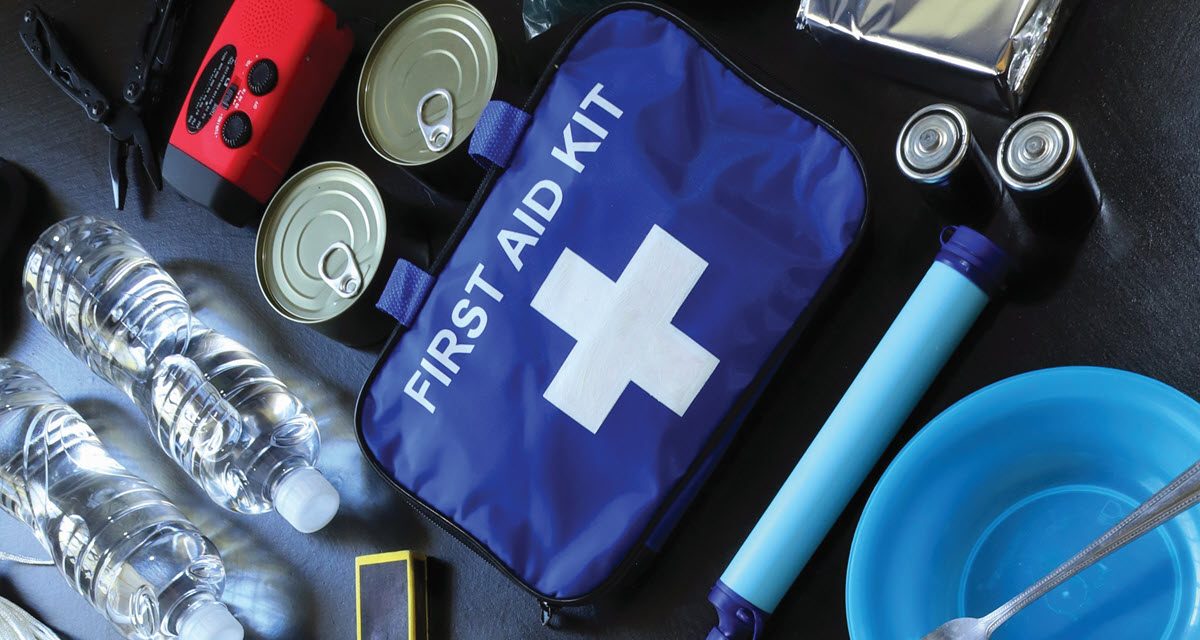
There is an unlimited amount of things that might be need ed; water purifying tablets, waterproof and windproof lighters and matches, a supply of survival food and water, a small mirror… the list can go on and on. I wasn’t trying to put together a complete survival list, but just a reminder that if you are flying to events and locations, it’s a good idea to plan ahead.
What Does This Have To Do With Insurance
Keep a digital or paper copy of your policy declaration pages and the phone number of your broker or the claims service with which you use. Remember, aircraft polices may cover some of the extras you are carrying. Check your policy as to the limits and type of items that are covered.
And let me say again, always carry a little “get out of town money.” This is enough cash for a tank of fuel, some food, a night in a hotel, etc. You would be amazed at how many small rural airports want cash for fuel. Plus, it can be difficult to get a ride to a bank or store that will give cash for the credit card. Take my word on this.