Twin-Engine Aircraft, Single Engine Personality
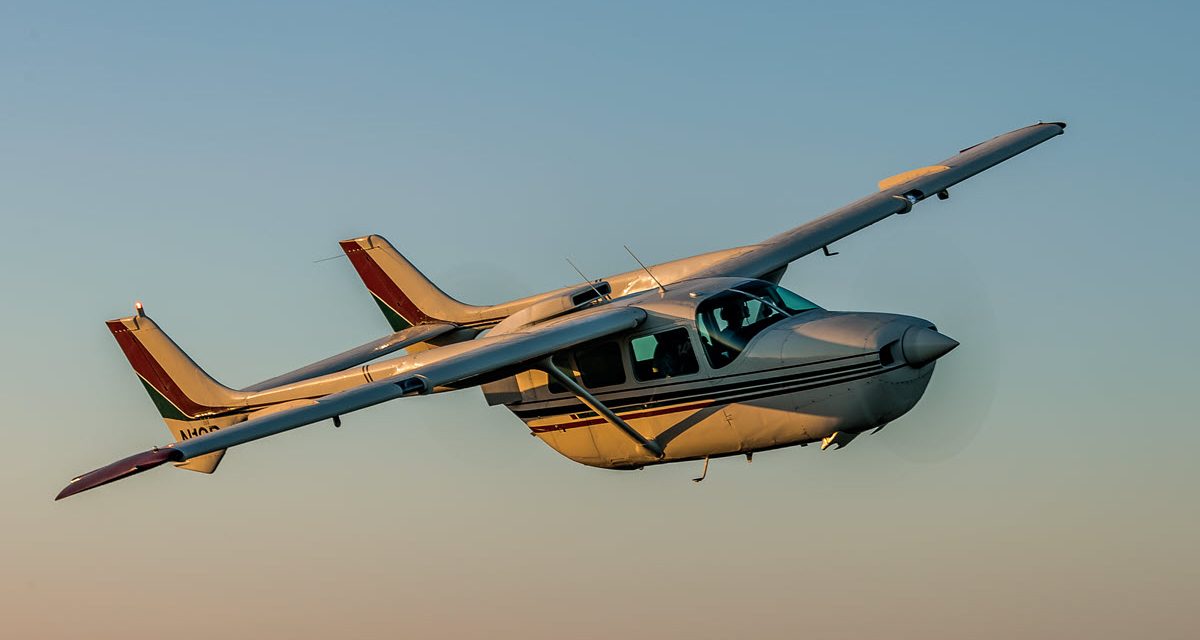
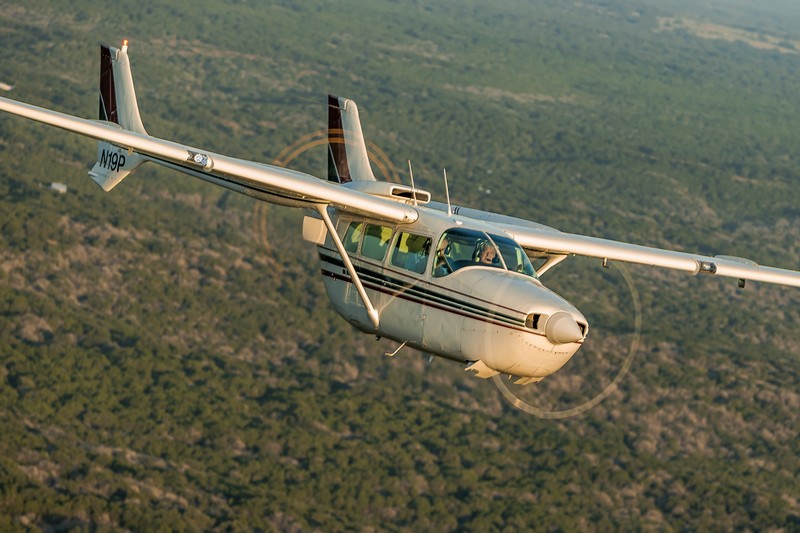
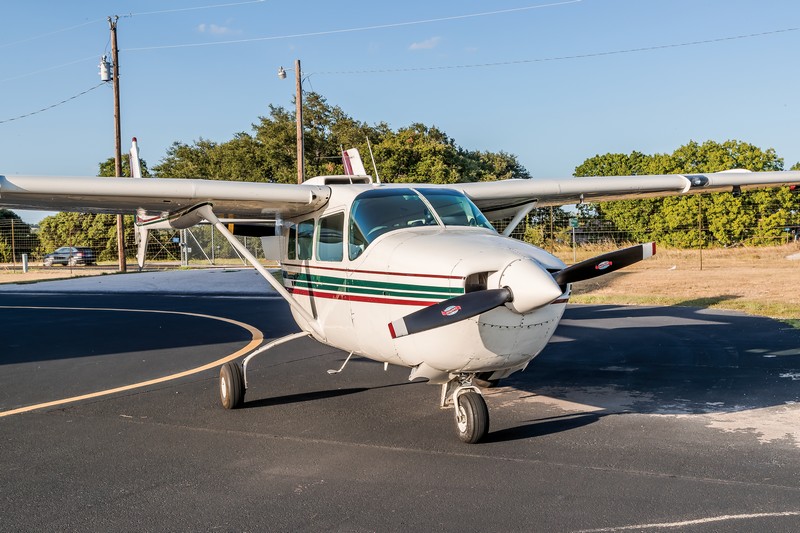
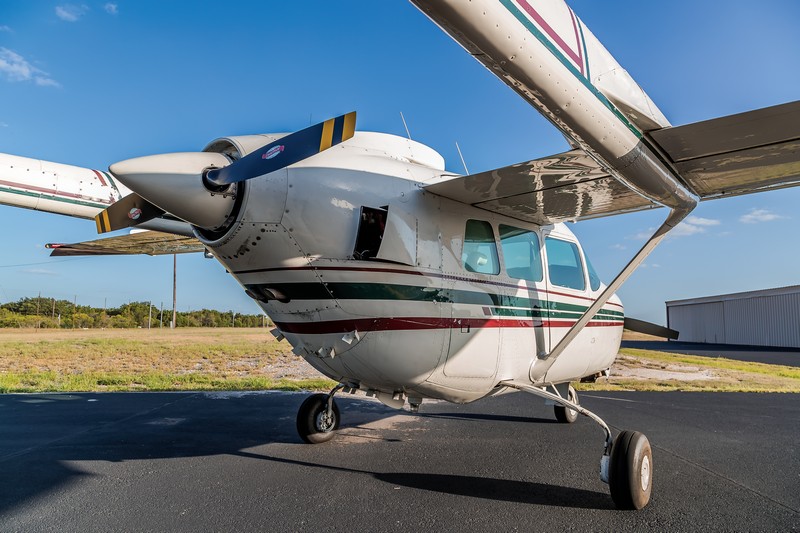
Photos of Greg Lively’s 1969 Cessna 337D by Jack Fleetwood (www.JackFleetwood.com)
Since 1964, the Cessna Skymaster has been trying to convince pilots that it is mild-mannered single-engine aircraft. In reality, it is a twin, with a few single-engine habits. The Skymaster has lived through years of verbal abuse, often called the “Mixmaster,” “push-pull” and a few names that shouldn’t be printed in a family magazine. The Skymaster is a good aircraft if you know its habits and learn how to fly and take care of this unique twin.
Skymaster’s History
The first Skymaster was put on the market in 1963 with front and rear 210 hp Continental engines and fixed tricycle landing gear. The designers felt this would be the ultimate in safety, and they felt the marketplace was more interested in safety than speed. The 336 was unusual to say the least, but slow. With two engines, the 336’s cruise performance was not very impressive. Book figures were 173 mph, but in the real world, cruise was closer to 150 to 160 mph. Safety wasn’t the only thing of interest to the buyers. Cessna figures show that 140 fixed-gear Skymasters (the 336) were sold in 1963 and another 55 were sold in 1964.
In 1965 the 336 became the 337 and was redesigned to include retractable landing gear. The basic, normally aspirated (non-turbo/non-pressurized) Skymaster was built from 1965 to 1980. The model designations were alphabetical — 337 in 1965, 337A in 1966, 337B in 1967, and so on. Turbocharged versions were available from 1967 (T337B) to 1971 (T337F) and then again in 1978 (T337G) to 1980 (T337H). Pressurized versions were available from 1973 (T337GP) until 1980 (T337HP II).
Cessna didn’t make the turbo version from 1972 through 1977. They felt the pressurized Skymaster would replace the turbo, but in 1978 they came out with the turbo again.
A Small Market Share
From 1963 to 1980, a total of 2,489 Skymasters were built. An additional 479 0-2As and 31 0-2Bs (the military versions) were produced, making a total production of 2,999. Add a few prototypes/experimental versions and the total number of Skymaster aircraft produced was 3,002. Why so few?
Opinions about why sales were low range from “The market was not as interested in safety as in speed” to “The aircraft was not a ‘macho’ twin.” Many companies felt that time in a Skymaster did little for “true” multi-engine time. There are also comments about Cessna’s dealer marketing programs. The Skymaster was built by the Pawnee single-engine division. Generally, it was sold by the single-engine dealers. That made it the top model in their product line. The twin dealers felt that it was a twin, and they should get to sell it. But for the twin dealers, it was the bottom of the product line!
And let’s not forget the safety record! The Skymaster didn’t establish itself as a safe aircraft in the beginning. The airplane had a few problems, but most of them were from the lack of appropriate education of the pilots.
Missing Training
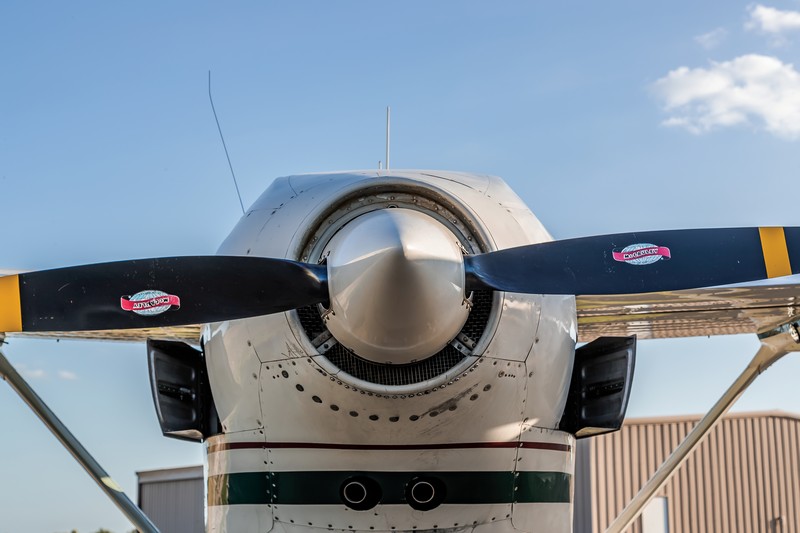
It is a twin, even if it acts like a single. The Skymaster reminds many people of the Cessna 210 — heavy and stable. Heavy, and on one engine it won’t leap tall mountains or climb to record heights — it is a twin-engine aircraft. The rear engine also contributed to a few problems. The old cliché, “out of sight, out of mind” might have been coined for the Skymaster. If you can’t see the rear prop, how do you know it’s turning? Apparently enough people didn’t know it was running, because Cessna changed the operating manuals to include leading with the rear throttle during takeoff, just to make sure it was working!
All those lessons that the twin-engine pilots learned — lose an engine, clean up the airplane — aren’t good for the Skymaster. The single-engine climb is best on the rear engine — about 300 fpm with the gear up. It is about 150 fpm with the gear down and locked. But it is around -250 fpm when the gear is in transition — yes that was a negative 250. Heavy, slow, one-engine approach — cycle the gear and you get sucked right onto the runway.
Taking Flight
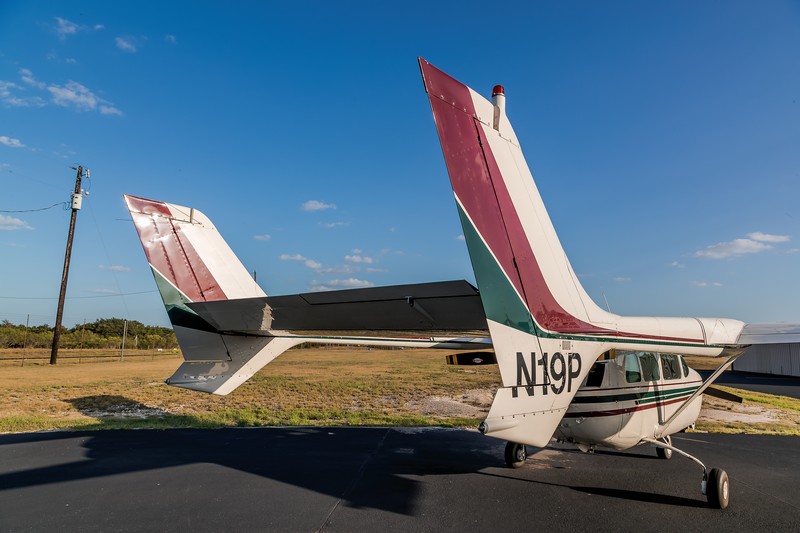
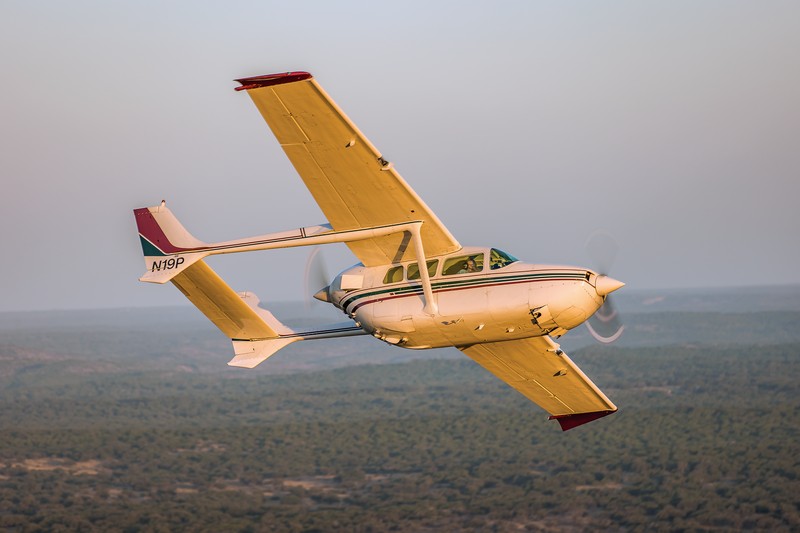
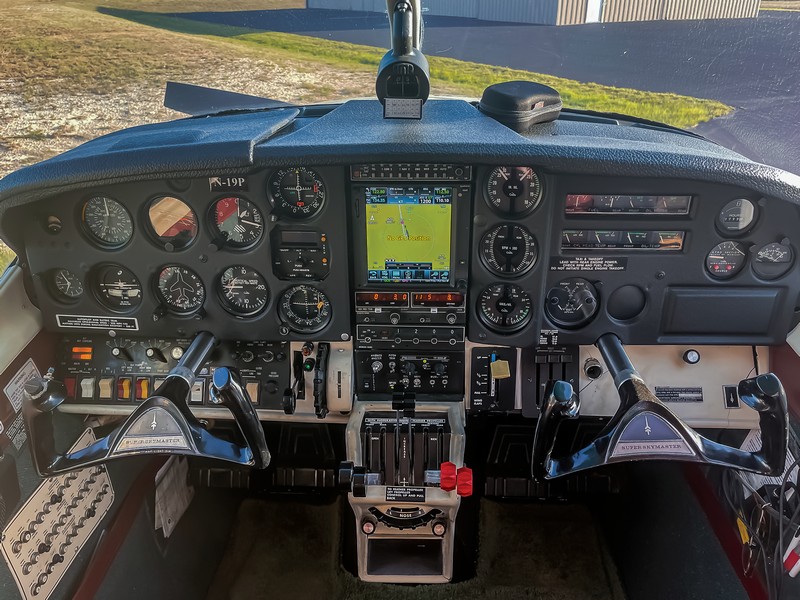
The Skymaster has the typical big panel and the heavy control feel of Cessna’s big high-performance singles. One pilot told me that he felt it performed like the 210 on both engines and like the 182 on one engine. That’s quite a statement — acts like a single yet has two engines.
Visibility is good with the forward seating cabin area. Room for the crew is plentiful, and the third and fourth passenger seating is OK. Seats five and six are a tight fit. Many owners use their Skymasters as a four- or five-person aircraft. Others have installed the cargo pod. The cargo pod isn’t attractive, but it sure increases the baggage area. Pilots state that the cargo pod does nothing important to performance. Finding a pod can be difficult, and if located the cost is $5,000 or more.
The only big difference in flying the Skymaster compared to a 210 is the extra engine. Many owners start the rear engine first and then the front engine. Always taxi slowly so you don’t throw runway trash into the rear prop. Another thing you will notice is the lack of “blue line” or critical engine information. There is no critical engine. If you lose an engine, you lose performance. But you don’t fight the aircraft!
Performance is typical Cessna — good short field even without STOL kits. Good climb is around 1,000 fpm. Remember, the newer the aircraft, the higher the gross weight and the lower the climb rate.
With the Skymaster you get good performance, about 160 kt cruise at about 20 gallons per hour. (A Turbo 210 owner told me he burns 17 gph for about the same cruise). Redundancy, that’s what the Skymaster has to offer. If an engine quits, the airplane slows down and performance drops, but it still flies! Owners who have had engine failures tell me, “ATC asks if I want to declare an emergency? No, just an inconvenience!”
The aircraft is a decent performer with good habits, if flown by a well-educated Skymaster pilot. You must learn the aircraft and its quirks. Don’t fall into the trap of “it’s a single with two engines.” It is still a twin!
Things to Look for in a Skymaster
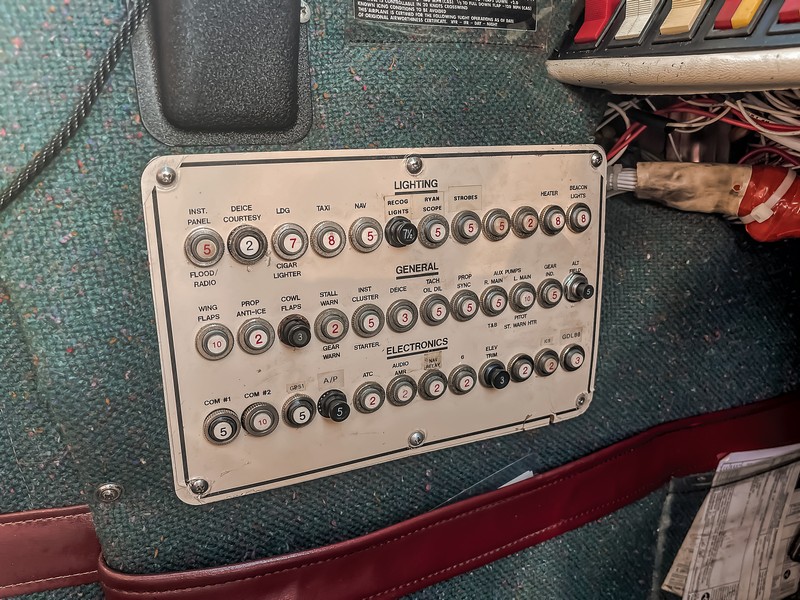
All the Skymasters from 1965 to 1972 had engine-driven hydraulic pumps to run the gear. Dual pumps were an option — great option to look for, but not necessary.
The biggest model changes came in 1973. This is the first year of the G model. The door became an airstair door and the electric hydraulic powerpack system ran the landing gear. Cessna took off the baggage door at this time. They all look basically like the pressurized models. These changes gave the Skymaster a “cabin class” styling.
1975 saw a few changes in the baffling. Most of the bad cooling stories seem to be from poor engine management. Use the cowl flaps and the mixture and you shouldn’t have a temperature problem.
Basic Buyer’s Checklist for a Skymaster
1. Oil leaks in the rear engine area are usually from loose rocker-box covers, leaky quick drain, and breather tube. The usual fixes are to keep the rocker-box covers tight, remove the quick drain, and modify the breather tube to exit out the oil drain holes (post ’75 aircraft). Check the oil level — don’t run over full! Most of the leaking oil ends up all over the tail feathers. Always carry a rag to clean up and watch where you walk.
2. Fuel hoses leaking. Check to make sure that they are the correct hoses. Service Bulletin MEB95-4, dated 3/24/95, reveals that some of the S1236-3, S1236C3, and S2495-3 series fuel hoses (found on all Cessna 303, 336, and 337 models) may potentially contain an Aeroquip 601-type rubber hose. The life expectancy of this type of hose when carrying avgas is not up to the specifications. Hoses should be checked for deterioration, cracks, and fuel leakage. Have the mechanic check it out!
3. Check the alternators and see if they are still 30-amp systems. Theoretically the Skymaster should never use more than 30 amps. With new radios, there is little draw. High draw is from de-ice systems, gear cycling, etc. Some models have a 60-amp system. This is great but costly. Remember that the Skymaster was built by the Pawnee single-engine division of Cessna. It was built basically like a single engine. Its charging system has two systems, but it only uses one at a time. If there is a surge, it will throw the complete system offline. I have heard of times that the system will go off the first time you put the gear up. If this happens, shut off the system (master, etc.) and turn it back on. It should work fine for the rest of the day. Another constant complaint is flickering panel lights. About the only solution is to clean all connections and adjust the regulators to matching voltage at the bus. The biggest problem seems to be corrosion on the connections.
4. Check the engine cases for the H logo. If there’s no logo, they could still be “light” cases and prone to cracks. More expensive at overhaul.
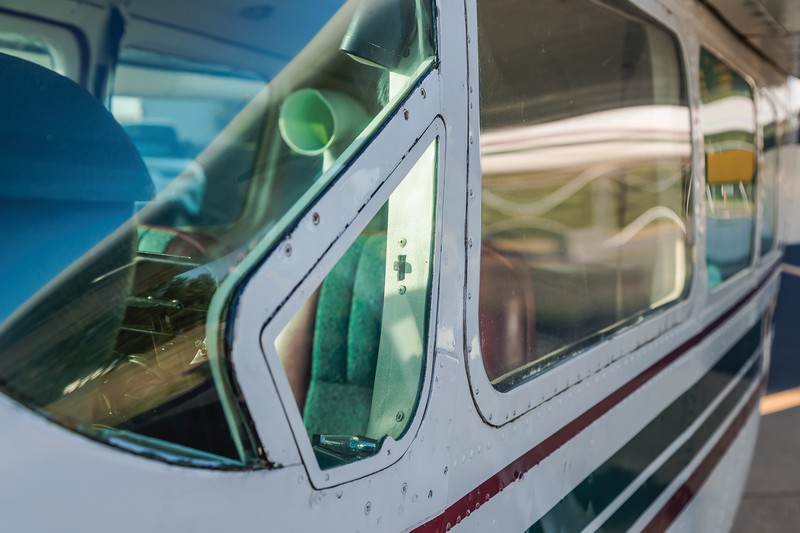
5. Windshields often had bad seals and leakage. Check the condition of the seal and inspect for possible damage to airframe, radio area, and headliner. The avionics access panel also is prone to leakage. This allows moisture to fall directly on your avionics.
6. Hot-running rear engine? Check baffling. Check bases of cylinders for leaks — the O-ring could be damaged if the engine has overheated (use the cowl flaps and mixture control). A good engine-monitoring system is worthwhile.
7. Inspect operation of cowl flaps. Slow or binding cowl flaps can damage the electric cowl-flap motor. Often the limit switches are not set correctly. New cowl-flap motors cost thousands of dollars. There are three manufacturers of the cowl flap motors: Dukes, Global, and Astromec. You might be able to have them rebuilt, but no guarantees.
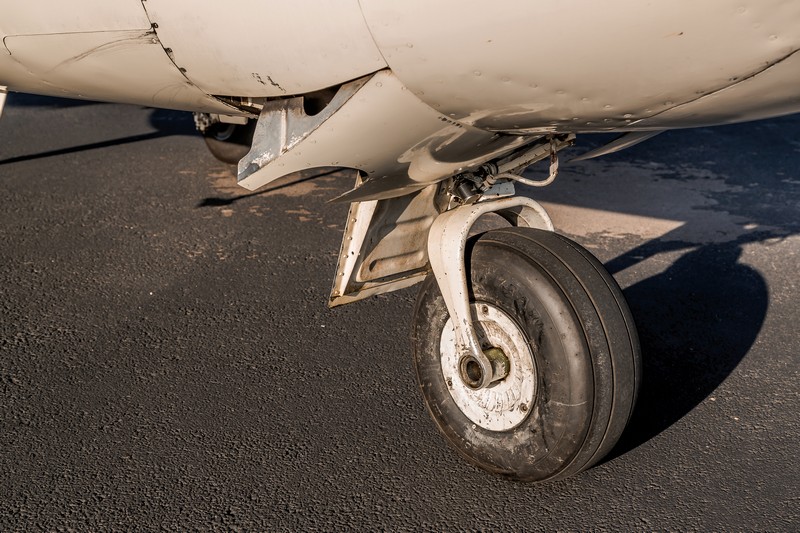
8. Inspect gear doors for fit. If they don’t fit properly, the plane could be prone to gear trouble. A good prebuy should include a retraction test!
9. Exhaust systems seem to break muffler clamps and associated hardware. Mufflers are costly. It appears that the clamp damage could be from vibration.
10. Check the motor mounts and the spinner bulkheads. The bulkheads seem to crack and allow the spinner to shake dangerously at startup and shutdown.
11. The rudder-pedal pedestals have been known to crack. Look for signs of future problems.
12. Hydraulic leaks. This usually needs the floor access panels removed; it can help tell you about potential problems with hoses.
13. While you’re looking in the floor, there is a service bulletin about corrosion in the belly of the aircraft. Apparently, the soundproofing material collects moisture, which pools in the fuselage, corroding the aluminum.
14. Check all instruments for operation. Inoperable gauges (fuel, etc.) can be expensive or impossible to replace.
15. Spar cap inspection for non-pressurized is at 5,000 hours and then every 500 hours. Pressurized is initially at 10,000 hours and then every 500 hours. Hard use (patrol, spotter, spray, etc.) is 3,000 hours and every 300 hours. Check with a mechanic to see if the aircraft is affected. This AD could cost you a set of new wing spars!
16. Normal ADs and service bulletins. Have a good mechanic that knows Skymasters do the prebuy inspection. It is worth the money to have the inspection done by a Skymaster mechanic.
Skymaster Market Tips
These prices are just guidelines. You can buy an average early ’60s Skymaster for under $50,000. But remember — they may have flown in, but it might cost double or triple that to make them fly out. Often the money for a Skymaster is in the engines. If both engines are run out, you could spend over $70,000, and that doesn’t include radios and cosmetics! The insurance and finance companies use price books as guidelines. Usually, they will go over the book prices if you have what they call “proof of value.”
The aircraft was also built in France by the Reims factory from 1970 to 1978. Look for the serial number — if it has an F in the front, it was built by Reims. There are also rumors that the measurements are different on the Reims airplanes. Researching all the different service manuals and manufacturer’s information, there is no indication that there is any difference.
Typically, an insurance company will require (for single-engine transition pilots) a minimum of 15 hours of dual and the centerline thrust rating before solo and 10 hours solo before hauling passengers. Finding an instructor that meets the requirements is the hard part. If you don’t have an instrument rating, most insurance companies will not provide coverage, or it will be so expensive you could have paid for the instrument training. And even if you have all the ratings and hours, very few companies want to quote “old” Skymasters or any twins. “Old” means anything older than, say, 1976.
When you talk Skymaster, it’s a love/hate relationship. Most owners feel it is the best aircraft they have ever owned. People who haven’t owned one fall back on the old negative stories. If you are looking for a new aircraft, find out the truth and consider a Skymaster.
What more could a pilot want? Skymaster offers twin-engine redundancy, centerline thrust simplicity, six-passenger capability, reasonable operating cost, decent performance, and a purchase price less than most single-engine aircraft!
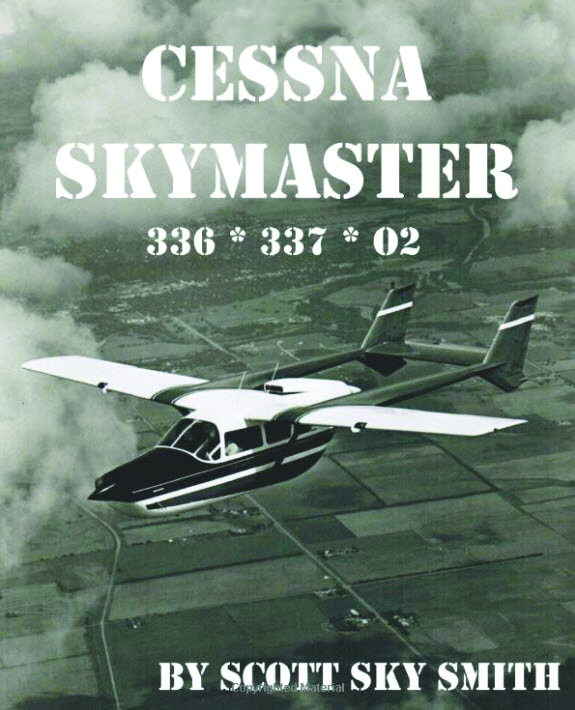
Scott “Sky” Smith is a nationally recognized writer and speaker. He is the author of “How to Buy a Single-Engine Airplane,” “How to Buy a Skymaster,” “Ultimate Boat Maintenance Projects” and “How to Build a Hot Tuner,” (published by Motorbooks International). Smith’s background includes: aircraft and avionics sales, boat dealership and fiberglass manufacturer. He is a single and multi-engine pilot with over 30 years’ experience.
Smith is also owner of Sky Smith Insurance Agency, a nationally recognized specialty insurance agency, insuring boats, custom vehicles, and aircraft since 1985.
Sky Smith authored the preeminent book on the Skymaster. Find on Amazon Here.