Every pilot has experienced it. The airplane feels sluggish on a hot afternoon. Climb performance suffers. The engine runs rougher than expected. Hot starts become frustrating. And somewhere along the way, someone on the ramp says, “Must be the density altitude.”
But density altitude affects far more than takeoff performance alone. It also directly impacts how fuel systems behave, how fuel-air mixtures burn, and how piston engines respond across changing atmospheric conditions.
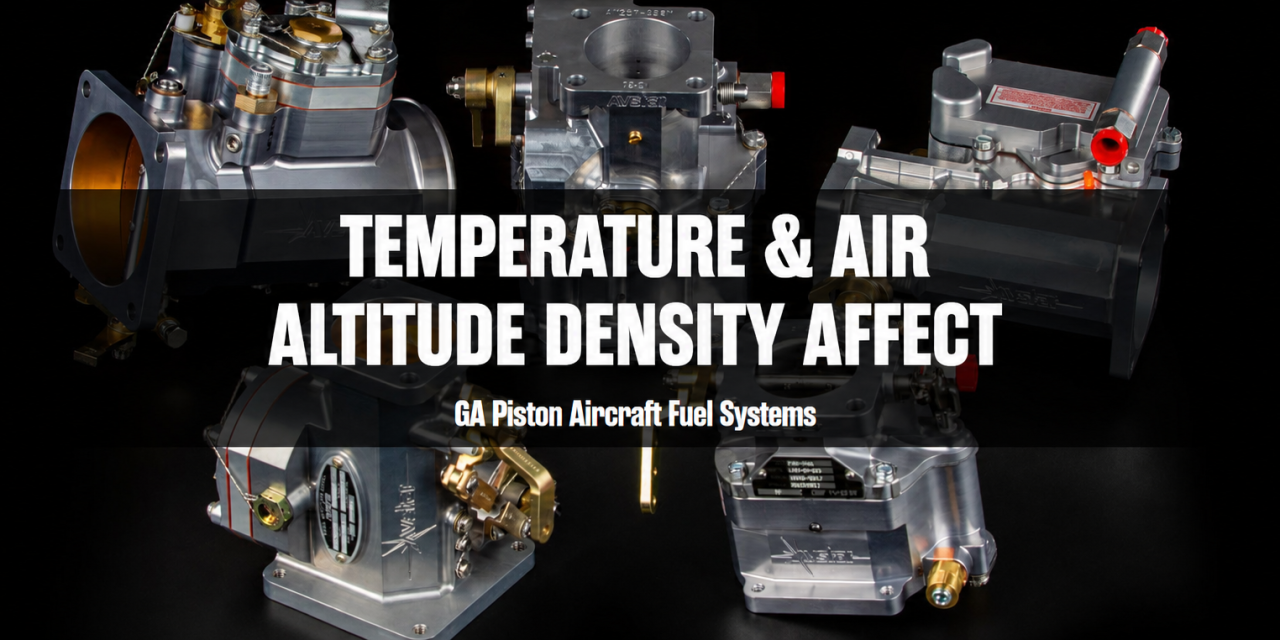
AVStar Fuel Systems recently released a detailed technical white paper exploring how weather, temperature, humidity, and air density influence fuel system performance in general aviation piston aircraft. While the paper is highly technical, the operational implications are very practical for owners and pilots flying legacy Cessna and Piper aircraft.
Why Air Density Matters
Piston aircraft engines depend on a precise balance between fuel and air for efficient combustion. As density altitude increases, the air entering the engine contains less oxygen. That changes the fuel-air mixture relationship and affects power production.
According to AVStar’s paper, engine power can decrease by approximately 3 percent for every 1,000 feet of density altitude, though actual performance varies depending on the aircraft, engine, and operating conditions.
Pilots commonly notice:
- Reduced climb performance
- Longer takeoff distances
- Rougher engine operation
- Higher engine temperatures
- Changes in mixture behavior
These effects are often most noticeable during summer flying, especially at higher elevations or during humid conditions.
Carburetors and Fuel Injection Respond Differently
One of the more interesting sections of the paper explains how carbureted and fuel-injected engines react differently to changing atmospheric conditions. Carburetors meter fuel based largely on pressure differential inside the venturi. As altitude increases and air density decreases, carbureted engines naturally tend to run richer unless the pilot adjusts the mixture appropriately.
Fuel injection systems generally maintain more consistent fuel metering across varying conditions because they reference airflow more directly. However, AVStar emphasizes that fuel injection systems still require proper mixture management and calibration.
In other words, neither system eliminates the pilot’s responsibility to manage mixture settings properly.
Hot Weather Creates Additional Challenges
The paper also explores weather-related operating issues that many owners encounter seasonally.
High temperatures can contribute to:
- Fuel vapor formation
- Hot start difficulty
- Temporary fuel flow interruptions
- Reduced engine performance
Humidity can also play a role by further reducing air density. While humidity alone is usually less significant than temperature, the combination of heat and moisture can noticeably affect engine behavior.
AVStar notes that fuel vapor formation after shutdown is one reason some aircraft become more difficult to restart during summer operations.
Carburetor Ice Is Still Relevant
Even experienced pilots occasionally underestimate carburetor ice risk. The white paper reviews how temperature, humidity, and power settings combine to create conditions where carburetor ice can form, even when outside temperatures seem relatively warm.
Typical signs include:
- Gradual RPM loss
- Engine roughness
- Reduced power
The paper reinforces the importance of proper carburetor heat usage and understanding how rapidly carburetor temperatures can drop internally during operation.
Maintenance and Calibration Matter
AVStar also emphasizes that fuel system performance depends heavily on system condition and calibration.
Inspection items include:
- Internal contamination
- Seal and diaphragm integrity
- Proper adjustment
- Fuel metering consistency
The company notes that some performance variations may only appear under specific operating conditions, particularly during high temperature or high-density-altitude operations.
For owners flying aging piston aircraft, understanding the interaction between atmospheric conditions and fuel system behavior can help separate normal operational characteristics from issues that may require maintenance attention.
Download the Full White Paper
AVStar Fuel Systems’ complete technical white paper, The Impact of Weather and Density Altitude on Fuel Systems in General Aviation Piston Aircraft, explores these topics in far greater detail, including combustion theory, mixture management, inspection considerations, and operational best practices.