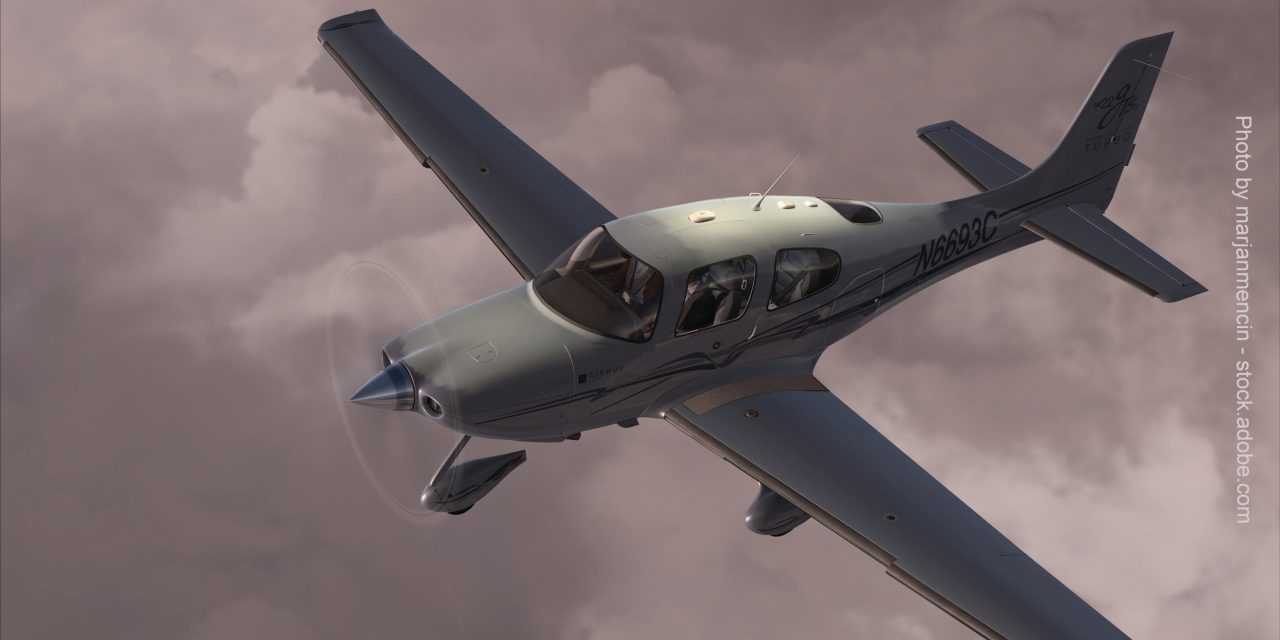
Years ago, during AirVenture, one of my editors and a factory representative took a flight in a Cirrus SR22, flying from Oshkosh to Duluth and back. Back then the Cirrus SR22 was touted as the new wave of aviation, featuring a side-control joystick instead of the conventional yoke, a ballistic parachute for added safety, and technologically advanced avionics, including fully coupled autopilots, moving maps, and more.
In the evening we would discuss the day, what we found of interest, and what was good for an article. Kind of a brainstorming session. It’s always neat to see what others consider newsworthy.
We all wanted to know each other’s impression of the Cirrus. What I remember most is how the editor didn’t recall much about how the aircraft actually flew; it was essentially a flight managed by the avionics, instruments, and autopilot. It seemed that those of us who learned on “old school” gauges, paper maps, and hand flying were being left behind. With many of the newer aircraft able to fly largely on their own, or so it seemed, flying the aircraft itself didn’t appear as important.
Beyond Their Skills
I bring this up because lately we’ve seen YouTube pilots flying and crashing aircraft in situations that don’t really make sense. From the insurance side, we are seeing more low-time, or even no-time pilots wanting to buy aircraft that, in my opinion, are well beyond their skills. We’re seeing an increase in students buying high-performance, retractable-gear aircraft, light twins, or slick glass-panel experimentals, as well as low-time pilots without an instrument rating wanting to buy turboprop, pressurized aircraft. The scenarios are endless.
In my seminars about buying and owning aircraft I talk to a lot of new “wanna be” pilots or pilots that are looking to transition into a fancy, high-performance rocket aircraft (single or twin) and what it will do to their insurance rates.
Before You Sign the Check
First, I think that the time is right to buy an aircraft. Prices are good and interest rates are reasonable and there are a lot of available aircraft.
Second, if you are going to an airshow (like AirVenture), beware, the buying bug is contagious. Aviation events are a great way to get excited about buying a new aircraft or trading up for something newer, nicer, and faster. Remember the old line, “the grass is always greener on the other side?”
Third, remember whatever aircraft you are buying, someone else is getting rid of it!
That’s not meant to scare you, it’s just my reminder to step back and take a practical look at what you are buying and make sure you have thought about all the “risks” that go with the decision. Risk’s being pilot ability, fuel cost, maintenance, insurance, etc.
This is my disclaimer.
There are a lot of good deals on older big singles and light twins right now. And why is that? For one thing, the operating costs are higher. The rule of thumb to figure the cost of operation for a light single is to take two times the fuel cost per hour.
Example: 10 gallons per hour, times $7 per gallon equals $70 per hour in fuel. Take that number times two and you get an estimated cost of about $140 per hour. That’s a basic operating cost that doesn’t include insurance, hangar, principle or interest.
Think how those multipliers change as the aircraft gets more complex and/or bigger. A heavy single has a multiplier of about 2.5 and a light twin has a multiplier of 3.5 to 4.
Example: If you have a light twin burning 20 gallons per hour times $7 a gallon fuel, that’s $140 in fuel. Multiply that number times four and you are at $560 an hour operating cost. But seriously, how many twin engine aircraft actually burn only 20 gallons for both engines, per hour.
Remember these numbers are just guidelines. The key is: the bigger, faster, and more complicated the aircraft, the more it costs. Really, it’s only money. What were you going to do with the money anyway? Me, I spent my money on airplanes, motorcycles, boats, and cars… the rest I just wasted.
What about insurance?
Another reason there are good deals on the older, larger aircraft is the cost of insurance and training so you can get insurance. Many an owner has located a cheap twin and paid good money for the aircraft, only to find the insurance company wants a premium — that is if you can even get insurance.
Let’s say you want an old Apache or Cessna 310. Good for you! I recently saw a Cessna 320 for $60,000. That’s probably a reasonable deal. It does need a little work and it’s out of annual, but the paint and interior are good. Hours are high, but not over TBO.
If you are a low time pilot (PPC) with 300 total hours, you are going to spend about $10,000 a year on insurance. But that’s not the biggest problem. There are probably only three companies that will provide coverage for that aircraft. Those companies will probably require 15 to 20 hours of dual and your multi-engine rating prior to solo. Then expect ten plus hours of solo prior to hauling any passengers. That means another few thousand dollars for the instructor. You spend a lot of money without even paying the expenses on the aircraft.
And surprisingly, it doesn’t seem to matter if you buy an Apache or a 320, the older the aircraft, the harder it is to insure. Some aviation insurance companies have put restrictions on older complex singles and twins. A few underwriters will not insure complex singles or twins if they are 30 years old or older. If you are already insured with them, they will keep you, but if you move to another company for a year, they will not take you back.
Older Plane, Higher Cost
Old, complicated aircraft cost more money to operate and insure. We had a customer who had a nose gear collapse in his 1968 Piper Arrow. The cost to repair was around $40,000, while the insured value was $45,000. The insurance company totaled the aircraft and that’s not even a heavy single or twin, just a simple complex aircraft. Own an old 1960’s era Cessna 210? Gear up landing will cost about $50,000 or more. The insurance company will total the aircraft. A Piper Apache for a $50,000 purchase price? A nose gear collapse requires two engine teardown and repairs at over $40,000.
You get the idea. The price of the parts is worth more than the aircraft. In the end, the underwriters raise rates or discontinue insuring those models because the numbers don’t make sense.
That doesn’t mean don’t buy them, but don’t be surprised when the agent tells you that you can’t get a quote, you need school, more ratings, or the premium will be $10,000. Just because you can, doesn’t mean you should. Qualified Doesn’t Mean Capable
I say this all the time: Even if you can afford to transition to a bigger, faster, cooler aircraft, this doesn’t mean you are qualified to fly the aircraft. With today’s electronics, automation, and sometimes nearly “autonomous” aircraft, it appears pilots forget to fly the aircraft. That means hand flying.
This can lead transitioning pilots to rely on aircraft automation more than their ability to actually fly. In the insurance industry we see it all the time — pilots trade up and don’t want to do the required training. They “assume” that the experience and ratings they have are enough. But remember even if the FAA says you are qualified to fly that category of aircraft; it doesn’t mean you are capable. Hours of actual flying experience and time in the make and model are very important.
Underwriters use statistics and numbers to decide what type of pilot they want and what kind of training is needed. Apparently, their actuarial data has been accurate enough to guide them in their requirements (and keep them in business). If they won’t insure the aircraft and/or the pilot, there is a good reason.
Move Up the Right Way
Here are a few basic tips to move up and keep your insurance costs down.
1. If you buy a turbocharged or pressurized aircraft, plan on having an instrument rating. Most companies will not insure a non-instrument pilot in a turbo or pressurized aircraft. If you want to have the turbo and you don’t have an instrument rating, DO NOT BUY A PRESSURIZED AIRCRAFT!!!
2. If you are moving up to a twin, most companies don’t want to insure you without an instrument rating. The smaller the twin, the better. If possible, get your multi-engine rating and fly about 25 to 30 hours in a rental before buying. It makes you easier to insure and can lower your rates. Of course, the big challenge will be getting an aircraft to rent, but that’s a different article! If you are buying a bigger twin or a pressurized aircraft, plan on taking factory approved school prior to purchase.
3. If you are moving from a fixed gear to retractable gear, get some experience. The more retractable time, the better. It doesn’t matter if it is in an Arrow or a 172RG, the hours (a minimum of 25 would be good), and the sign off in the logbook, are what the underwriters want to see.
4. If you are buying a cheap, older, high-performance aircraft, maybe you just purchase liability insurance. I know it doesn’t protect the aircraft, but sometimes it’s a bit easier and of course cheaper, to just worry about liability. The cost of the aircraft is a fixed cost. If something happens to the aircraft, think of it like a trip to a casino in Las Vegas.
If you go into the new purchase with multiple ratings and experience, the rates are lower and there is a larger selection of insurance companies for the agent to choose from. As always, get out your checkbook and remember, it’s only money! If you think you might want to move up, consider your options, and get a quote to help make an educated and informed decision.
One of the most important things I was told is, “Whatever happens, fly the aircraft first.”