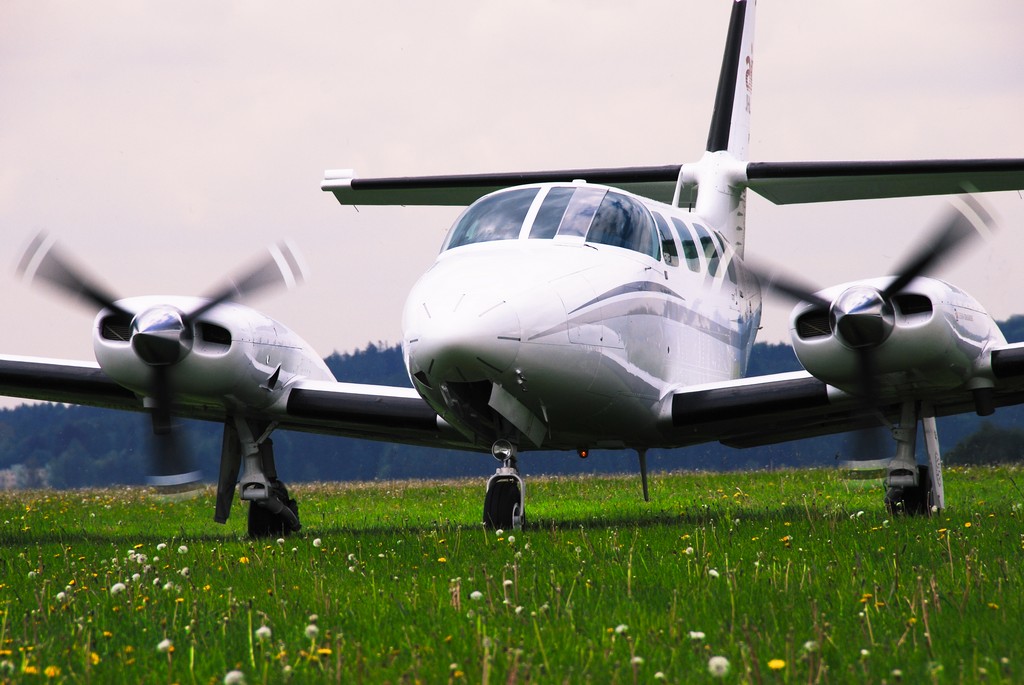
Turbocharged, pressurized and comfortable, the Turbo 210 is/was among the best of the six-seaters.
Photos by Jim Lawrence
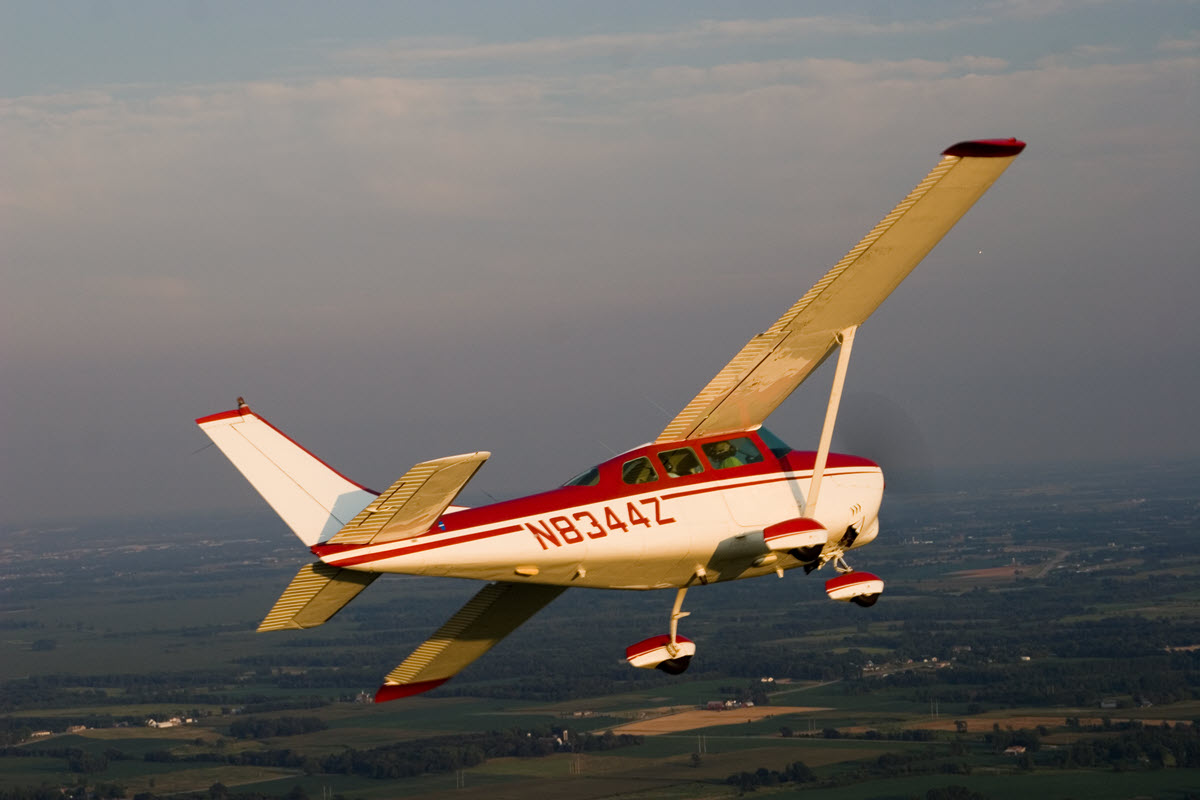
Altitude is the great equalizer. Those of us granted a view from the high road see the world very differently than aviators confined to the first two miles of sky. Altitude washes the Earth clean; it erases the boundaries between states, countries and ideologies and ignores the politics of geography.
From a pilot’s perspective, altitude can solve many of the problems of flight. Unless you’re flying in the Himalayas, terrain clearance ceases to be a consideration. Other general aviation traffic shrinks to insignificance as it trudges through the weather far below. Sheer height can allow a pilot to effectively use his or her airplane in winter when others lock their hangar doors until spring. It can improve radio range, increase the safety pad between you and the ground and allow you to cruise in smooth air and sunshine, high above the majority of meteorological misery that lives below 18,000 feet in the bottom half of the sky.
A high sky can even be an end in itself; never mind the practical advantages. Imagine the view over Orlando in central Florida on a clear day with both coasts in sight. Look down on Manhattan Island and all five boroughs of New York City from 20,000 feet straight up. Stare in wonder at California’s jagged Mount Whitney and the entire 100-milelong Owens Valley from two miles above the tallest peak.
Unfortunately, there’s a price to be paid for such wonderfulness, and upward mobility isn’t cheap. If you feel you need to fly above the crowd, you must buy an airplane with a turbocharger.
In some respects, turbocharging is one of the simplest answers to the question of how to improve aircraft utility. Basically a compressor powered by exhaust gases, a turbocharger is semi-self-sustaining. Within certain limits, a turbo allows an aircraft to ignore the constraints of altitude, to smoothly cruise far above the irregular Earth and troubled clouds. It lifts a pilot above most other general aviation traffic, increases VHF communication and navigation radio range and may even provide access to spectacular tail winds. For some, a turbo may be an unnecessary extravagance, adding cost and complexity, increasing fuel burn and maintenance and, sometimes, reducing engine life. Pilots who fly primarily VFR or over low-lying terrain may have difficulty justifying the expense of a turbo. Similarly, the frigid skies of winter often convince pilots without weather-topping capability to forget flying until the weather improves
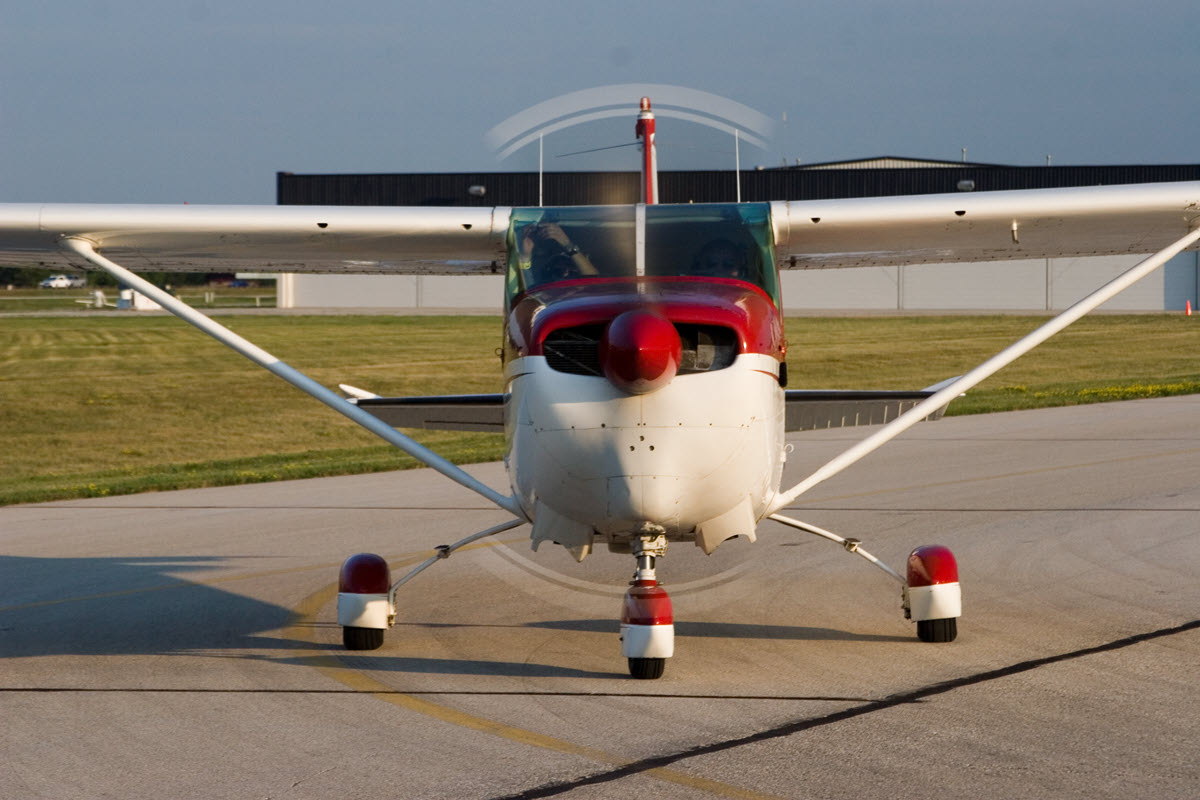
Hal and Michelee Cabot lived on the East Coast in Fitchburg, Massachusetts, but filed IFR on a regular basis and certainly didn’t lock their airplane in the hangar all winter. The Cabots’ 1980 Cessna Turbo Centurion was one of the most talented turbocharged singles in the industry and a universally outstanding load-hauler. Michelee, like so many other pilots convinced of the turbo advantage, regularly flew the Cessna throughout the northeastern Golden Triangle and up and down the East Coast from Maine to the Bahamas, with an occasional trip to places such as San Antonio, Texas, or the West Coast for good measure.
“We often used the 210 in place of the airlines,” she says. “That allowed us to fly into locations we either couldn’t reach at all by airline or only at the cost of inconvenience, discomfort and extra time. We could beat the airlines to many destinations they service, mainly because of the efficiencies of traveling by general aviation.”
We caught up with the Cabots and their pristine Turbo Centurion on one such trip to a recent AOPA Convention in Palm Springs, California. If their heavy-breathing 210 wasn’t the absolute apogee of the model, it certainly came close. Equipped with all the usual goodies plus a Bendix RDR-160 radar, WX-10 Stormscope, Northstar GPS, Riley intercooler, Flint tip tanks and a partridge in a pear tree, N4723Y was about as heavily equipped as any 210 I’ve seen.
You might expect useful load on such a machine to consist of full fuel and no passengers, but that wasn’t the case. Payload with the standard 89-gallon tanks full worked out to 934 pounds or five souls plus baggage. When Michelee and Hal really wanted to stretch the range, they filled the 32-gallon tip tanks, reducing cabin load to 742 pounds. This was a moot point, since most of their flying was done with only two up front plus heaps of baggage.
Many pilots considered the T-210 the best variant of the type. During its final dozen years of production, the blown version outsold the normal breather two to one. While the inflatable P-210 sold well, it wouldn’t perform with the turbocharged model, primarily because the power demands of pressurization regulated the latter Cessna singles (except the final P-210R) to comparatively lackluster climb and marginal cruise. The P-model also suffered from a relatively low pressurization differential -3.35 pounds—that limited practical cruise height to 20,000 feet.
It’s hard to believe the 210 started life as a souped-up, retractable, tricycle- gear Cessna 180 way back in 1960. The whole concept of a highwing retractable with wheels sleeping in the belly seemed strange in those days (indeed, gear problems were to plague the 210 throughout its life), but Cessna obviously overcame. From start to finish during a quarter-century of production, the Wichita, Kansas, company built just more than 9300 Cessna 210s of all varieties, some 4500 of which were turbo models. That suggests a level of acceptance far beyond most other airplanes, even Cessnas. Only the 152, 172 and 182 exceeded the 210’s production numbers.
The rest of this article and the specifications and performance of the 1981 Cessna 207can be seen only by paid members who are logged in.
Have a website login already? Log in and start reading now.
Never created a website login before? Find your Customer Number (it’s on your mailing label) and register here.
JOIN HERE
Still have questions? Contact us here.