12 Things to Know about the Golden Eagle
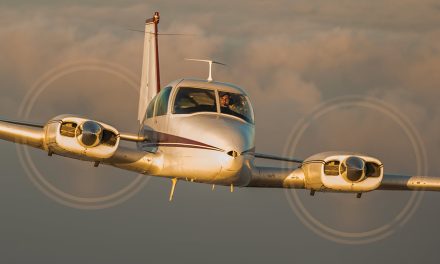
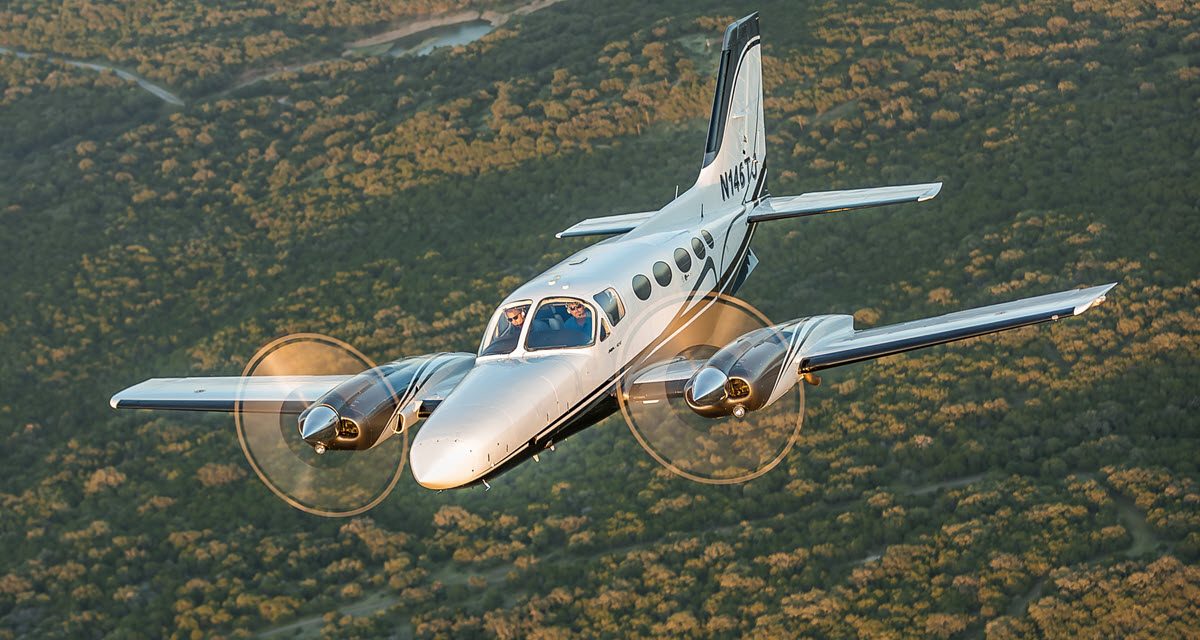
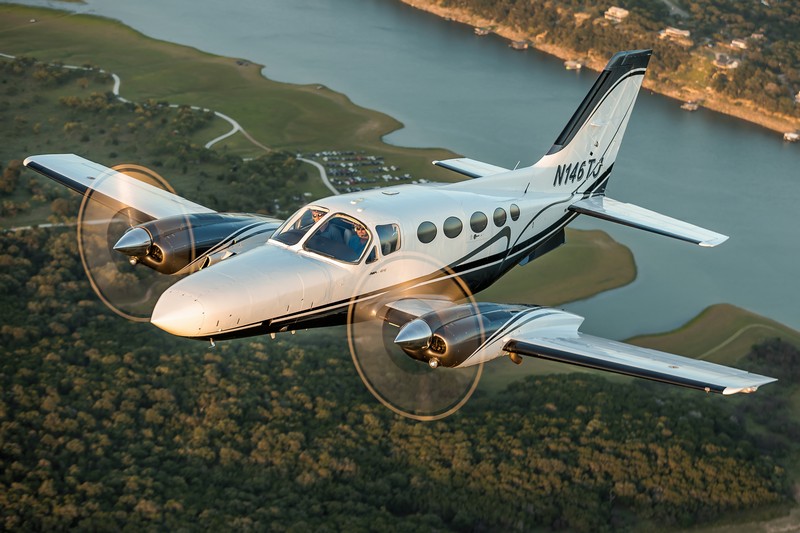
Photos by Jack Fleetwood (www.JackFleetwood.com), 1978 Cessna 421C
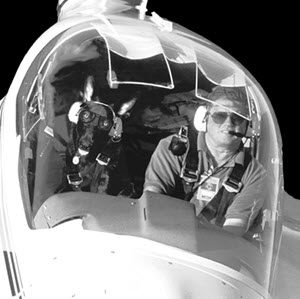
Cessna 421s are talented machines, capable of flying a variety of missions. When properly equipped, they can be pressed into service as air ambulances, freighters and small package haulers, and even dog transports. I know of a swimming-pool contractor in the Indio, California, area who used to fly retired racing greyhounds from Mexico all over the country, relocating them to new homes, in a 421.
Of course, they’re mainly used as either corporate machines or in the employ of families who have need for a plane with capabilities beyond a typical piston single. Because of their size and specs, 421s are special vehicles, including realistic cruise speeds of 210 to 220 knots.
Here are 12 things to know about the Cessna Golden Eagle:
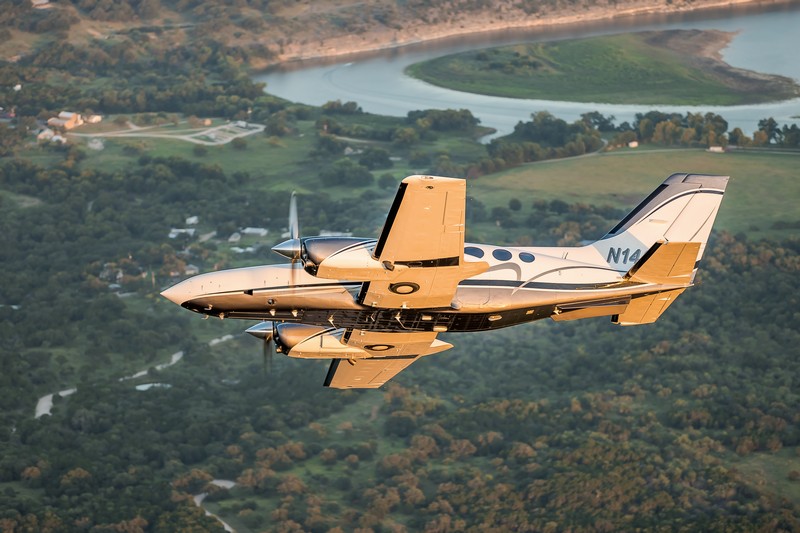
1. It’s High on the List of Wide-Body Twins
Consider for a moment what $400,000 will buy on the pre-owned aircraft market. You could opt for a used Malibu — a six-seater that will lift two-plus-four and speed cross-country at 200 knots. You might select a used 36 Bonanza, one of the standards of the industry, and fly at lower altitude for shorter distance but still in the lap of luxury (as long as you’re not too wide of hip).
Or you could choose one of the ultra-wide-body, cabin-class twin 1980s vintage Cessna 400 series. The top of that class was the Cessna 421, the premier piston product from the Wichita company, produced between 1968 and 1985.
Though Beech fans might argue in favor of the Duke, the 421 became known as the top pressurized business airplane, if only by weight of numbers. Cessna built nearly 2,000 421s during the airplane’s 17-year model run, and nearly all of those big twins were pressed into corporate service as business transports.
2. It Likes Cross-Country Trips
Long cross-country trips are what the 421 does best. The 421 was the top of Cessna’s piston twin line back in the ’70s and ’80s, the apex of models such as the 402 Businessliner, 404 Titan, and 414 Chancellor. The 421 took top honors as perhaps the ultimate corporate twin back in the ’80s, before Cessna CEO Russ Meyer shut down all piston aircraft production for 10 years.
The 421 Golden Eagle had been the top of Cessna’s twin line through the ’70s and ’80s, an eight-seat luxury machine capable of 220 knots or better at 25,000 feet. Powered by a pair of geared 375-hp Continental engines, the 421 had become the premier corporate transport in the industry, competing with Piper’s P-Navajo, Beech’s Duke, and Rockwell’s 680 Commander.
The airplane was produced for some 20 years, so performance specs varied significantly between models, but typical fuel burn was a realistic 40 to 42 gph, and with the long-range 270-gallon tanks topped, the big Cessna had an easy five-hour endurance — 6.5 hours at economy settings.
3. It’s Big and Comfortable
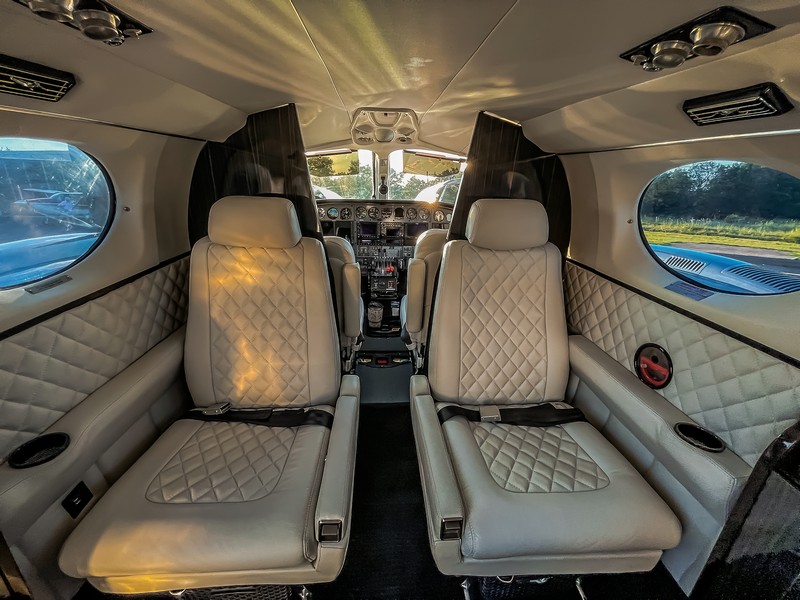
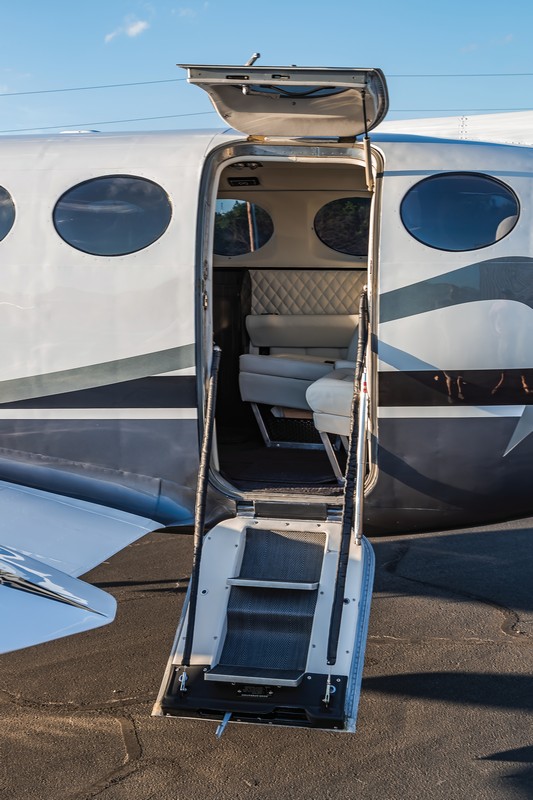
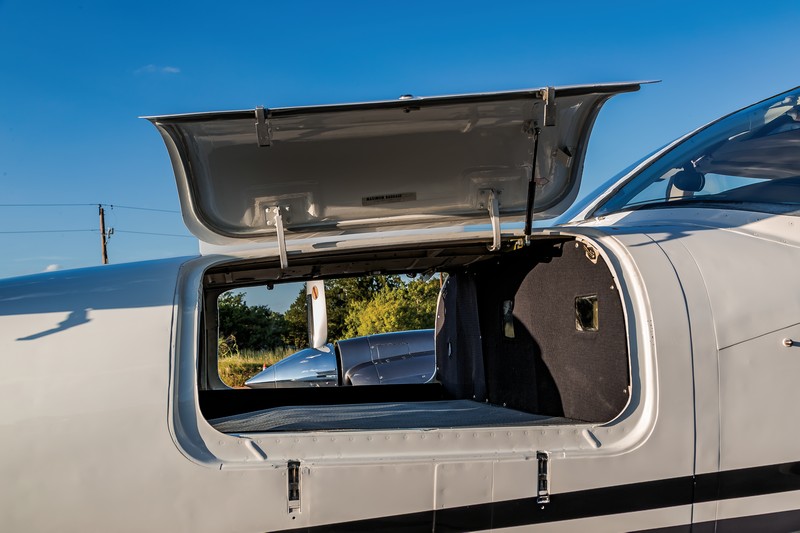
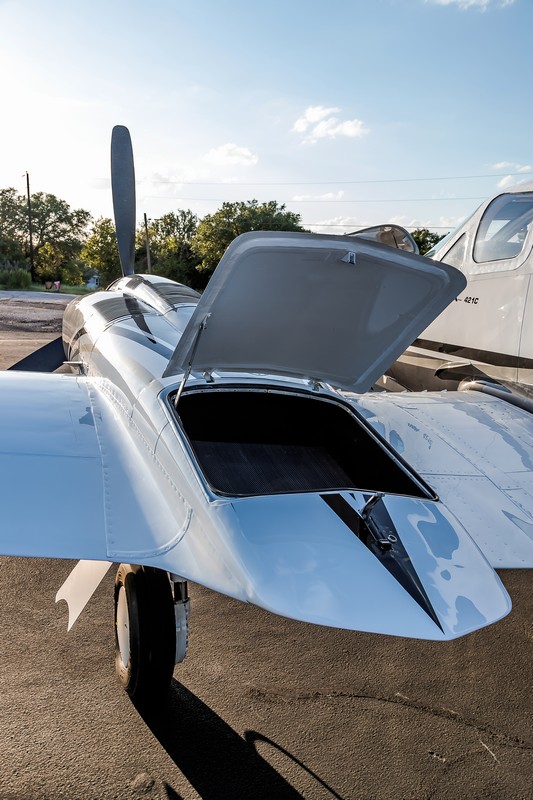
By any measure, the 421 is a luxurious, comfortable machine — depending on the model and configuration, roughly 50 to 55 inches across by the same dimension tall. The main cabin featured a rear-facing second row, worktables that fold out from the side walls, and an onboard blue room in the rear. Pressurization is adequate to keep everyone breathing normally at 5-mile heights, and the interior noise level with the geared props loafing along at less than 2,000 rpm was similarly civilized.
An efficient air conditioning/heating system keeps everyone comfortable, and the pressurization system provided air compressed to the equivalent of 8,000 feet while the airplane cruised at FL250, well above 80% of the world’s weather and turbulence, most often flying on top of the clouds, cruising in smooth air and sunshine. That’s exactly the scenario CEOs and executives of mid-level companies expect of a corporate transport.
4. It Climbs Well Despite Its Size
Despite the airplane’s 7,450-pound gross weight, power loading is a low 10.6 pounds/hp, and the result is a brisk climb once the underwing is clean and the Cessna has caught its breath. Upward mobility could be as good as 1,950 fpm, and if you high jumped to FL250, you could plan trips out to 1,000 nm.
Technically, the 421’s service ceiling was listed at 30,000 feet, but that’s probably optimistic, and in any event, few 421s are reduced vertical separation minimum (RVSM) certified.
Climbing to altitude was expedited by a power loading of less than 10-to-1, one of the primary indicators of efficient climb. In an ascent from sea level, the 421 could manage 1,800 fpm or more, allowing climb to the lower flight levels in less than 15 minutes. A high jump to the airplane’s optimum height of 25,000 feet typically required less than 25 minutes.
5. It’s Often Used as a Corporate Plane
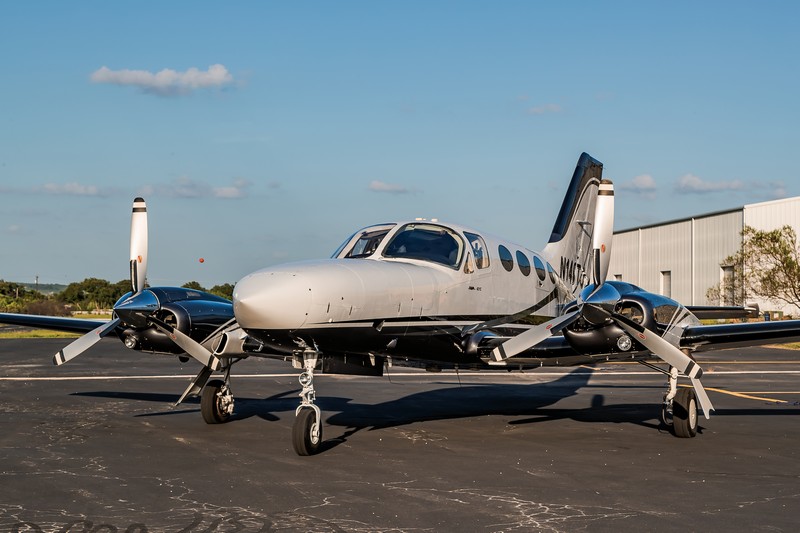
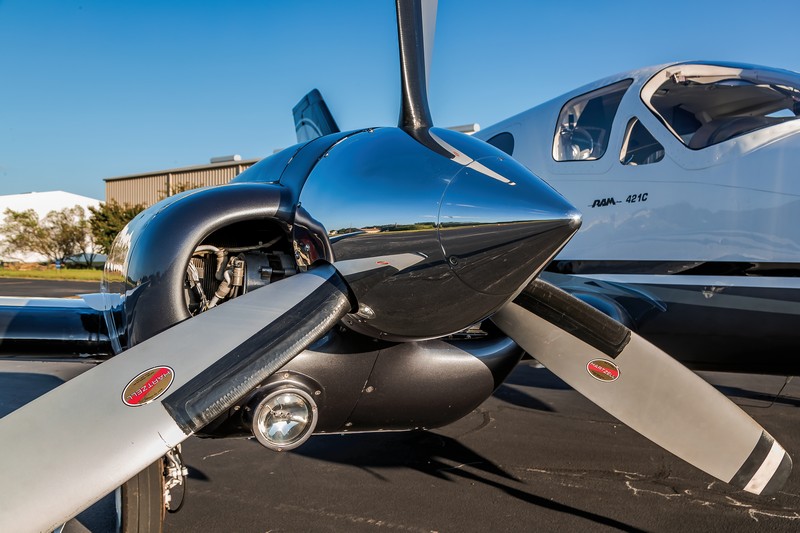
Add it all up and you can understand why the Golden Eagle is popular all over the world as a corporate transport for small to medium companies. Many of the type were flown by a crew of two, certainly not required by the Golden Eagle’s performance, but reassuring to owners riding in back.
In the days before turbines came to dominate the corporate skies, 421s were extremely popular for short- to medium-range missions that required a plush, six- to eight-seat airplane capable of spanning the U.S. with only one stop.
The manufacturer’s suggested empty weight was 4,500 pounds, so a theoretical base useful load was 2,950 pounds. More realistically, a typical empty weight on a fully equipped, late-model 421 was probably about 5,000 pounds against a 7,450-pound gross weight. Though some Golden Eagles had the large 270-gallon tanks, most 421s probably flew with the standard 213-gallon capacity.
The rest of this article & 421C Golden Eagle Specs & Performance can be seen only by paid members who are logged in.Have a website login already? Log in and start reading now.
Never created a website login before? Find your Customer Number (it’s on your mailing label) and register here.
JOIN HERE
Still have questions? Contact us here.