Back to the Basics
By Cessna Owner Organization Staff and JP Instruments
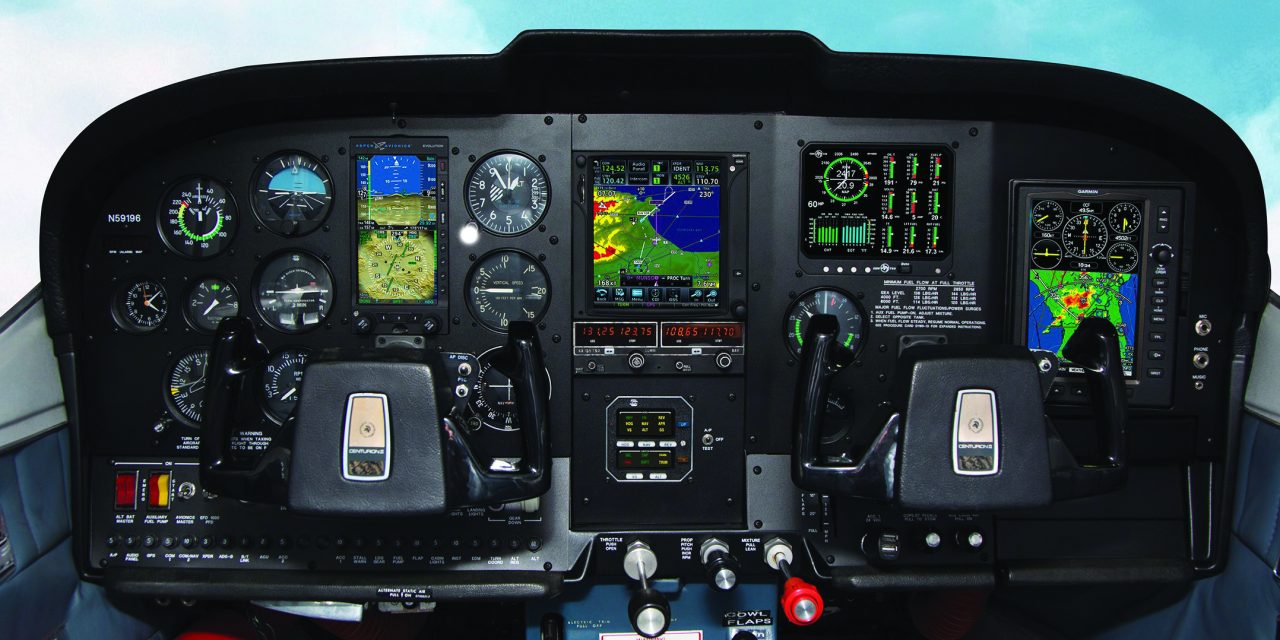
Photo Above: Cessna with JPI EDM- 930 courtesy of Cincinnati Avionics
If you own or fly a piston-engine aircraft — be it a Skyhawk, Cardinal, Citation or other model — consider how adding a full‐function engine monitor can change the way you operate, maintain, and troubleshoot your airplane. These devices aren’t about flashy gizmos; they’re about making engine health visible, catching problems early, and giving you real-world data that pays off in safety, reliability, and lower costs. Below is a down-to-earth look at what an engine monitor can do, why you should have one, and how the information it provides can help you fix things before they get worse.
What an Engine Monitor Does
At its core, an engine monitor is a kind of “flight engineer for the cockpit.” Instead of relying solely on individual mechanical gauges (oil pressure, oil temperature, cylinder head temperatures, exhaust gas temperatures, etc.), a monitor pulls together multiple engine parameters, continuously watches them, records them, and provides alerts if something drifts out of bounds.
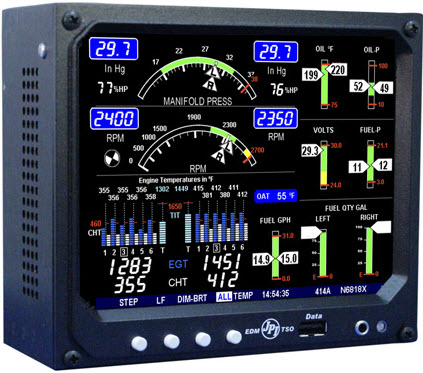
Here are key functions you’ll commonly find:
- CHT (Cylinder Head Temperature) and EGT (Exhaust Gas Temperature) measurements for each cylinder, rather than just an average or a single gauge for all cylinders. This cylinder‐by‐cylinder view is crucial.
- Oil temperature, oil pressure, fuel pressure, electrical system voltage/amps, manifold pressure, outside air temperature, fuel flow, remaining fuel monitoring, and more (depending on how equipped).
- It logs and stores data over time: you fly, it records. Later you (or your mechanic) download the data and look for trends, deviations or anomalies.
- It gives you audible and/or visual alerts when a parameter exceeds a preset limit.
- Many units include “leaning assist” functionality: by monitoring EGTs in real time across cylinders and fuel flow, they help you lean the mixture more precisely (rich of peak or lean of peak), which improves fuel efficiency and engine condition.
- Some integrate fuel management which includes knowing how much fuel you’ve used, how many gallons remain, your fuel burn rate, sometimes even linking to GPS data so the computer can estimate fuel remaining for your destination.
In practical terms, rather than glancing at a handful of gauges, the monitor gives you real numbers, detail on each cylinder, trend lines you can track, and alarms you can trust. It’s more sophisticated than just adding a fuel‐flow meter or extra gauge; it’s engineered for the whole engine.
Why You Should Have One
1. More accurate awareness of engine condition
Many aircraft were designed at a time when instrumentation was simpler—individual analog gauges, no data logging, no per-cylinder temperature scanning. That’s fine if everything’s behaving, but if one cylinder begins to run hotter, or one injector is richer/leaner, you might never see it until the trouble gets serious. With an engine monitor, you see exactly which cylinder’s CHT is creeping, or which EGTs are divergent. For example, one pilot noted that their monitor flagged EGT on cylinder #1, as it was running 240 degrees hotter than the lowest EGT reading of the other 3 cylinders. This led to the discovery of a plugged injector.
Have a website login already? Log in and start reading now.
Never created a website login before? Find your Customer Number (it’s on your mailing label) and register here.
JOIN HERE
Still have questions? Contact us here.
Founded in 1986 in Huntington Beach, California, J.P. Instruments was established by mechanical engineer and former Pratt & Whitney test engineer Joseph Polizzotto. Drawing on his expertise with thermocouples and instrumentation, he created the company’s first product—the Scanner™—while flying his Cessna 172. Today, JPI is a world leader in aircraft engine-data management systems, fuel-flow instrumentation, and precision probes and sensors, trusted by pilots and mechanics for innovation, accuracy, and service.
Contact JPI at JPInstruments.com or 800-345-4574.